
If you market an iPhone app, a screenshot may reach you claiming ChatGPT now sends more downloads than Google. Check the label on that row before you repeat it.
Indie developer Blaida, who posts as @kedytcom, put one on X on October 25, 2026. It shows 94 impressions and 59 downloads from ChatGPT, against 5 downloads from Google. Apple's acquisition documentation says Safari is excluded from App Referrer. A Google figure read from that category can miss much of Google's reach.
ChatGPT appearing by name in App Store Connect is real news. Calling it a win over Google is where I stop agreeing.
The first of these posts came from Balaji Nagisetty, who makes an app called DualTake. He wrote on October 18, 2026 that 592 people downloaded it through ChatGPT, 18 through Chrome and 6 through the Google app.
Two days later, a developer of the app SloMo told r/appledevelopers that ChatGPT had appeared as a referrer in their App Store Connect data, with 6 impressions and 5 downloads. Aitor, an app developer replying to Nagisetty, asked whether those users "stick around as long as the search ones?"
Blaida's post followed on October 25. He wrote that ChatGPT is "making me money while I sleep," and he put the revenue from those 59 downloads at $112. "Meanwhile, Google sent me just 5 downloads," Blaida added. He closed by calling AI search optimization a possible next big opportunity for indie developers.
Apple files Google in more than one place
All three read the Source Type report, and Apple's definitions decide what the numbers mean. Apple describes App Referrer as taps on a link inside an app, including Apple apps such as Messages. Safari is the exception. Web Referrer covers taps from a website, and when a chain of redirects in Safari ends on a product page, Apple says the referring website is the last URL in the chain.
Chrome gets its own rule. For iOS apps, Apple says taps from websites in non-Safari browsers "are attributed as that web browser app in app referrers."
The comparison people are posting looks like this. App Referrer holds the ChatGPT app, the Google app and Chrome. A person who searches Google in Safari and taps through to the App Store lands under Web Referrer, with the website as the source. A search typed inside the App Store lands under App Store Search. A line that says "Google" in one category misses the others.
Blaida does not say which view his 5 came from. Nagisetty's three figures name apps, the kind of entry App Referrer holds. A Safari visit would sit elsewhere.
What the numbers support
Take the word impressions. Apple says Unique Impressions "show how many unique devices viewed your app on the App Store."
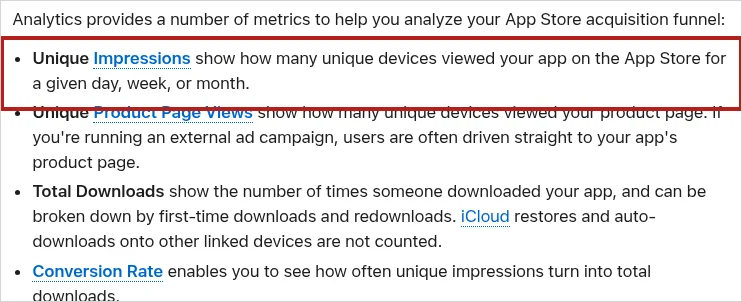
That counts store views. It does not count the times ChatGPT named the app in an answer, and the 94 cannot tell you how often the app was recommended and ignored.
Within that limit, 59 downloads from 94 impressions is about 63 percent. None of the posts gives a time window, which makes one developer's ratio hard to set beside another's. None says what people asked ChatGPT before they tapped through, and the SloMo developer wrote that they wanted to know.
A recommendation turned into a download, and Apple's report put a name on the source. That is the outcome I care about in AI search, and it is why these posts deserve attention. They do not show ChatGPT displacing Google, because the Google side of the comparison is incomplete. The clearest lever I can see for an app maker is a product website that says plainly what the app does and who it is for, since that is the page a recommendation has to draw on. These developers could settle the Google question by posting the full Source Type split, and until they do, the 5 is a Google number with unknown coverage.
Free newsletter
The Sherpa Brief
One email a week on what changed in AI search, what it means, and what to do about it. Written for marketers, SEOs, and publishers.
Free. Unsubscribe in one click.